
The Next Evolution of the AI Marketplace: Beyond Data Gravity
The future of AI marketplaces: stop moving data to the cloud. Bring the models to the data.
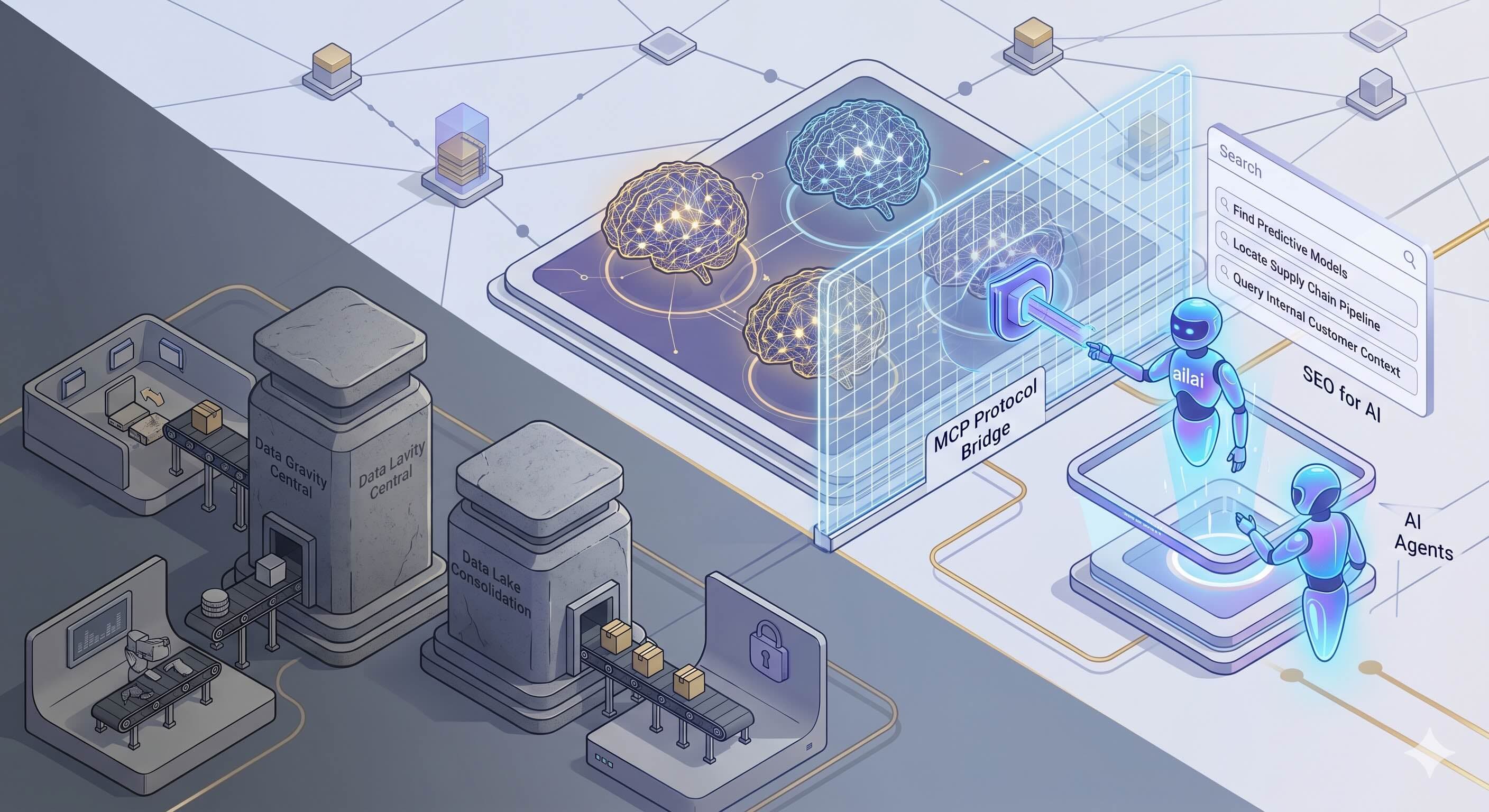
For the last decade, the big story in data architecture has been consolidation. Platforms like Databricks and Snowflake built massive businesses on a simple pitch: put your data in our ecosystem and the analytics will follow.
It worked. Really well, actually.
But we are moving from a world of human analysts running dashboards to a world of autonomous AI agents doing the work. And that shift changes everything about how enterprise data needs to be structured, accessed, and monetized.
The Firewall Problem
The most valuable data for AI training isn't the public web scrapes everyone already has. It is the sensitive, unstructured, deeply contextual data sitting inside corporate firewalls. The stuff companies would never upload to someone else's cloud.
The old model for data marketplaces meant moving or copying datasets into a centralized environment. But data has gravity. Moving it creates friction, security risk, and latency. And for the most valuable data, moving it is often a non-starter from a compliance standpoint.
This is exactly why we built ai.market as a non-custodial marketplace. Instead of forcing data to migrate to a centralized cloud, we act as a routing layer. The compute and the models go to the data, not the other way around.
The data stays in place. Enterprises skip the compliance nightmares. And the whole thing actually works for the kind of sensitive datasets that matter most.
I think of it this way: the data stops being the payload. The model becomes the visitor.
Agents Are the New Analysts
Look at traditional data marketplaces and you will see interfaces designed for humans. BI integration, SQL querying, visual discovery portals. Click here, drag there, build a chart.
But the primary consumer of data going forward won't be a person. It will be an AI agent.
This is a fundamental design question. We built ai.market around programmatic, autonomous interactions from the start. When an AI agent gets tasked with a complex workflow, it needs to discover, evaluate, and invoke the right data pipelines or models on its own. No human clicking through a portal. No manual discovery step.
An agent-first architecture isn't a nice-to-have. It is the whole game.
SEO for AI Is Real
This creates a completely new discovery problem. We are moving past traditional search engine optimization into something I think of as SEO for AI.
When an enterprise needs a specific predictive model or a secure data pipeline, the thing doing the searching will increasingly be an LLM. Not a person typing keywords into Google.
Marketplaces need to expose their catalogs in ways that machines can reason about. A platform that organizes its offerings to be semantically understood and dynamically invoked by LLMs becomes critical infrastructure for the agentic web.
It is not just about being readable by humans anymore. It is about being discoverable by algorithms.
Why MCP Matters
Standardizing how AI models connect to decentralized, firewalled data sources is the last big piece. This is why adoption of open standards like Anthropic's Model Context Protocol matters so much.
When a platform enables MCP access to its models and pipelines, it is not just adding a feature. It is adopting an open, universally interoperable standard. It lets different AI systems securely request context from internal tools without custom integrations that break every time something changes.
MCP turns an AI marketplace from a closed ecosystem into an open, plug-and-play network for the enterprise. That is a big deal.
The Walled Garden Is Over
The centralized data marketplaces of the last decade solved the problems of the analytics era. They did it well. But AI training and execution require a different approach.
The platforms that will matter over the next ten years will be non-custodial. They will be built for autonomous agents, not human analysts. They will be optimized for LLM discovery. And they will be deeply integrated with open protocols like MCP.
The strategic question for enterprise leaders has changed. It is no longer "how do we move our data into the AI ecosystem?"
The question is: "How do we let the AI ecosystem securely come to our data?"
We are building ai.market to answer that question. We shall see where it goes, but I think the direction is clear.